 fyllyo
Which document is actually missing
A traveler often has a passport in hand and a visa somewhere else, such as in an old passport left at home. Software that sees “left at home” or an expired passport can mark both boxes, or the wrong one.
IMMIGRATION FORMS · USCIS · BUILT IN
Add the traveler’s notes, passport pages, flight bookings and a photo of the visa left at home. Fyllyo fills Form I-193 on your Mac. Anything it can’t settle from the documents is left for you, with the reason.
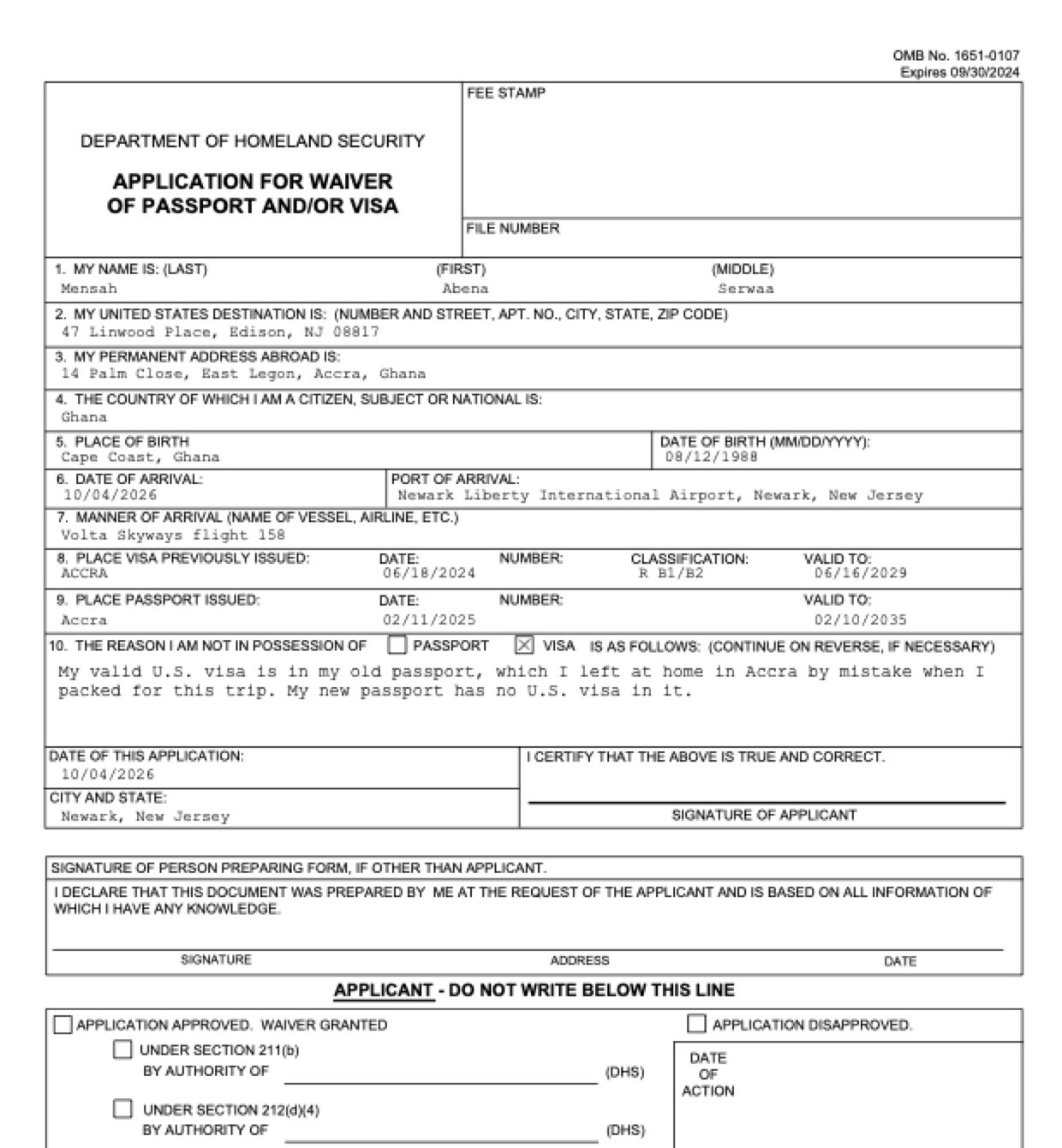
Form I-193 is one page, but the papers behind it describe two passports, more than one visa, a flight that was booked and a flight that actually landed, and several addresses on both sides of the ocean. Software slips when it takes the first one it finds, or writes its own account of what went wrong. These are the common places AI tools and autofill get it wrong. What the form requires is for the Department of Homeland Security to say. Follow its instructions. USCIS official page for Form I-193.
A traveler often has a passport in hand and a visa somewhere else, such as in an old passport left at home. Software that sees “left at home” or an expired passport can mark both boxes, or the wrong one.
When the visa sits in an expired passport, the file has two passports with two issue dates, two expiry dates and two places of issue. Software can copy the old passport’s details because that is the one with the visa.
Old passports often hold an expired visa next to the current one. Software can take the first visa it reads, or mix the dates of the two.
A booking confirmation names a flight, an airport and a date, and a later email changes all three. Software often copies the original booking, so the arrival date, port and flight describe a trip that never happened.
A visitor’s papers list a hotel on the booking, an event venue, a relative’s workplace and home, plus an old address abroad. Software can put any of them in the destination box, or the old address in the permanent-address box.
Item 10 asks why the passport or visa is missing. AI tools often write their own account, adding details the documents never give, such as a theft or a date.
The preparer section is for someone other than the traveler who prepared the form, as the form says. When an airline agent’s name and office address appear next to the form, software can treat that person as the preparer.
With a test client and seven documents (the traveler’s statement, a flight booking, a rebooking notice, the current passport’s data page, a photo of the old passport and visa, a message from her brother and a form preparation record), Fyllyo filled 22 fields in 11 seconds. Each answer shows the lines it came from.
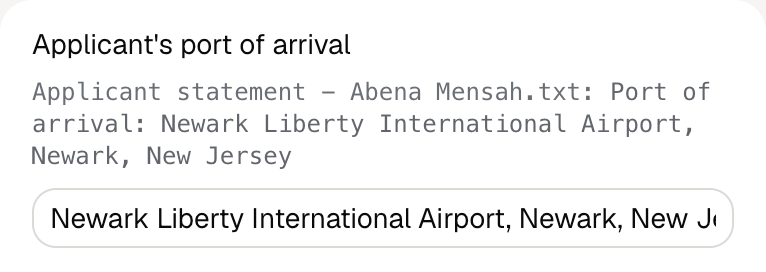
Fyllyo can fill all 28 fields on Form I-193 from the client’s documents. Lines the documents don’t support stay blank and are listed for you to check.
You confirm on every form
Fyllyo reads the documents you already have. These can be PDFs, scans, photos, Word files or typed notes, and you can add several at once. Fyllyo works out which document answers which line.
Filling Form I-193 for clients? Compare AI form fillers for law firms.
Client documents and the filled form never leave your computer. Fyllyo uploads nothing. Once it is set up, filling works offline.
Fyllyo doesn’t decide what to file, give legal or tax advice, or submit Form I-193 for you. Use the USCIS’s official page for Form I-193 and your professional judgement. Fyllyo does the reading and the typing.
Fyllyo reads scans and photos as well as PDFs, Word files and typed notes. Clear, readable copies give the best results, and every answer on Form I-193 still shows the line it came from.
Try form filling free for 5 days. Then buy Fyllyo Paid once for $99. It is a lifetime licence with free updates and no subscription. Filling forms on your Mac uses no AI credits. Pricing and licence details.